Parent site · placeholder

All episodes

One idea per reel
Peptide Lab · Episodes

One idea per reel, newest first. Every episode comes with what it covers, a stamp on each point, and its sources.

EP 15
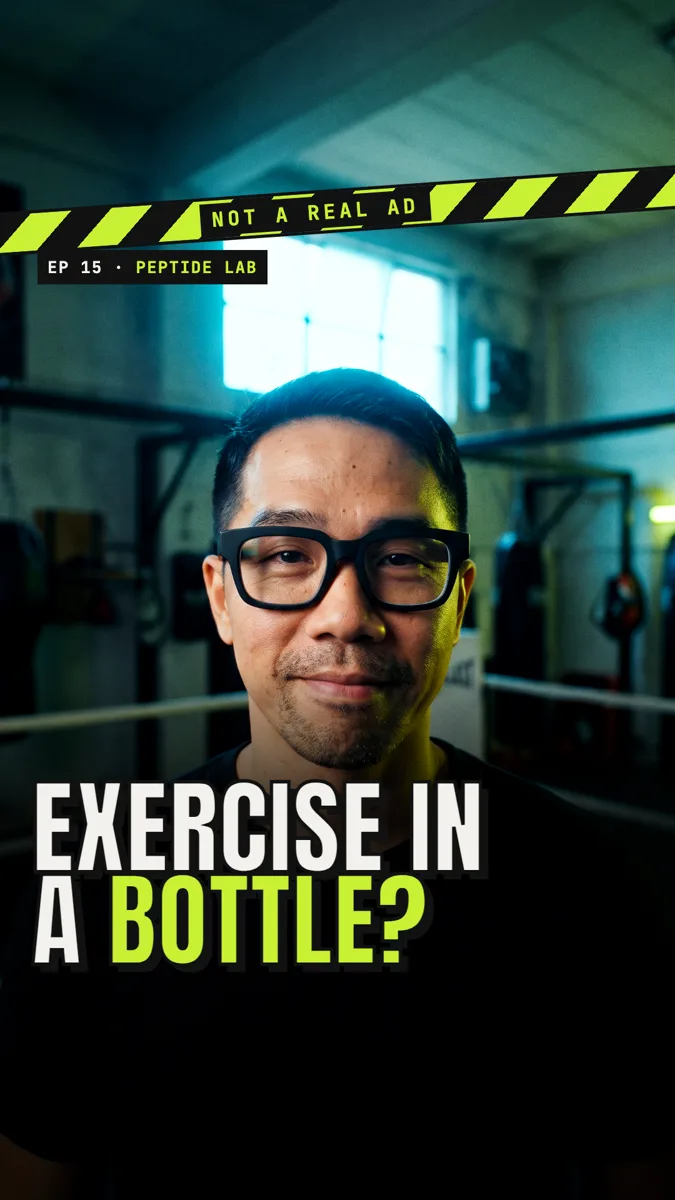
Episode 15 cover: Exercise in a bottle? I checked MOTS-c first ▶
EP 15 · EXERCISE IN A BOTTLE? · EDU ONLY1:59

Exercise in a bottle? I checked MOTS-c first

A 1990s sports-drink ad that isn't real. They call MOTS-c "exercise in a bottle", and I'm thinking of trying it. So I ran it through my 3-M check: mice, money, medals. Your body already makes it. So far, only the mice got the gains.

Watch ▶

What it covers

  1. ● Proven in humans

    Your body already makes MOTS-c. It's made from DNA inside your mitochondria, your cells' power plants.

  2. ◐ Reported

    One bike ride sent it up about 12 times in the thigh muscle of 10 young men. In the blood it barely rose.

  3. ○ Animal / lab only

    Old male mice given MOTS-c for 2 weeks ran 2 times longer on a treadmill.

  4. ● Proven in humans

    No trial of MOTS-c itself in people has published results. One trial is listed. But its sponsor listed 8 trials within 5 weeks in early 2026, this one included, and one is titled "Mock Study". So I don't count it.

  5. ◐ Reported

    The only version tested in people was a modified copy. In its 20-person liver test, fat dropped almost as much on placebo. The company later moved to dissolve.

  6. ● Proven in humans

    MOTS-c is banned in sport by name, at all times, on the same line as AICAR, 2008's "exercise in a pill".

Specimens in this episode

Explore on this site

Sources

  1. Lee et al. 2015: MOTS-c discovered, Cell Metabolism (PMC)
  2. Reynolds et al. 2021: exercise and old mice, Nature Communications (PMC)
  3. FDA briefing on MOTS-c, July 2026
  4. FDA list of compounded drugs that may pose safety risks
  5. CB4211 trial registry (NCT03998514)
  6. CohBar 10-K for 2022 (SEC)
  7. MOTS-MET trial registry (NCT07505745)
  8. WADA Prohibited List 2026
  9. USADA advisory on the 2027 Prohibited List
  10. Salk Institute 2008: "Exercise in a pill"
EP 14
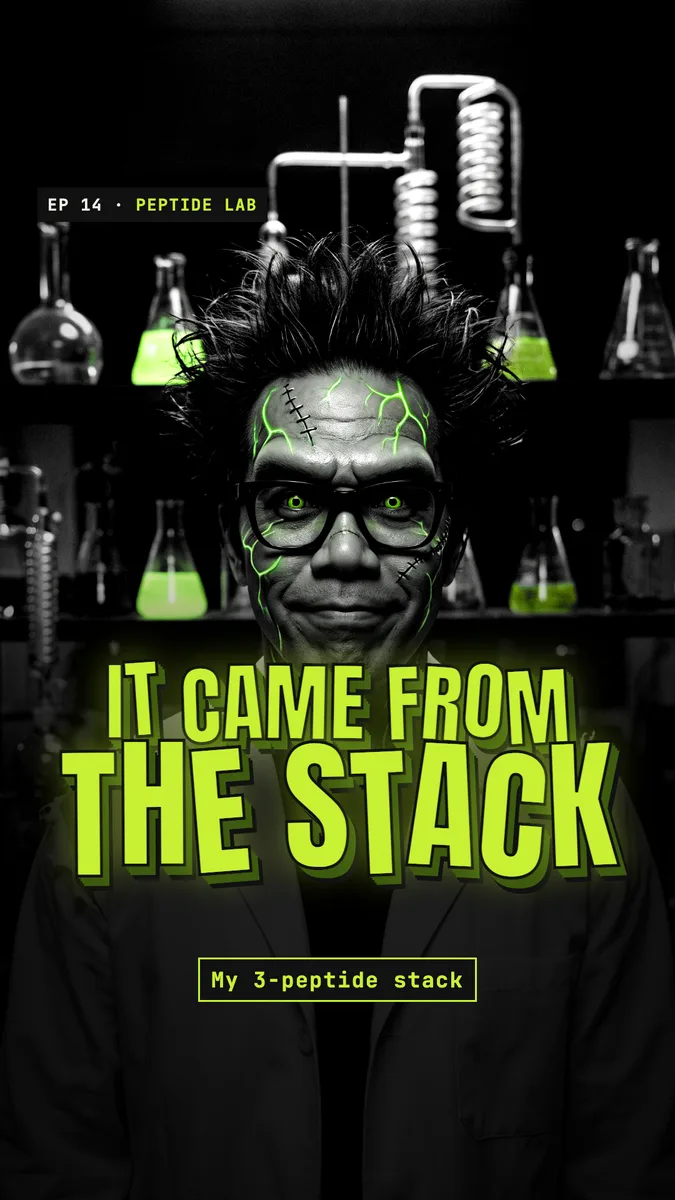
Episode 14 cover: Can you mix peptides? It came from the stack ▶
EP 14 · IT CAME FROM THE STACK · EDU ONLY2:24

Can you mix peptides? It came from the stack

A 1950s monster-movie lab. I take retatrutide, Semax and Selank at once, and I'm thinking of adding MOTS-c and GHK-Cu. So I opened the files: the famous stacks first, then mine. The monster isn't what we know. It's what nobody tested.

Watch ▶

What it covers

  1. ◐ Reported

    In US clinic notes, half of BPC-157 users were also taking something else.

  2. ◐ Reported

    The famous BPC-157 + TB-500 pair in people: 4 patients on a phone survey, with no one to compare them with.

  3. ○ Animal / lab only

    The one test of that pair against each part alone, in 32 rats: the pair did no better than either one.

  4. ● Proven in humans

    GLOW and KLOW, the 3- and 4-peptide versions: zero human studies I could find. The same for any two of my five.

  5. ● Proven in humans

    A real combination weight-loss drug was tested in 3,417 people for 68 weeks, with each part tested alone too. In US rules, every part of a combination has to earn its place.

  6. ● Proven in humans

    Change two things at once and you can't tell which one did what. That's why real combination trials test each part alone.

Specimens in this episode

Explore on this site

Sources

  1. Biçer 2026: BPC-157, TB-500 and both in 32 rats (PubMed)
  2. Lee and Padgett 2021: BPC-157 + thymosin beta-4 knee chart review (PubMed)
  3. Clinic-notes preprint 2026: 1,039 BPC-157 users (not peer reviewed)
  4. Garvey 2025: the 3,417-person combination trial, NEJM (PubMed)
  5. US rule on combination drugs, 21 CFR 300.50
  6. FDA guidance on testing two new drugs together, 2013
  7. FDA list of compounded drugs that may pose safety risks
  8. WADA Prohibited List 2026
EP 13
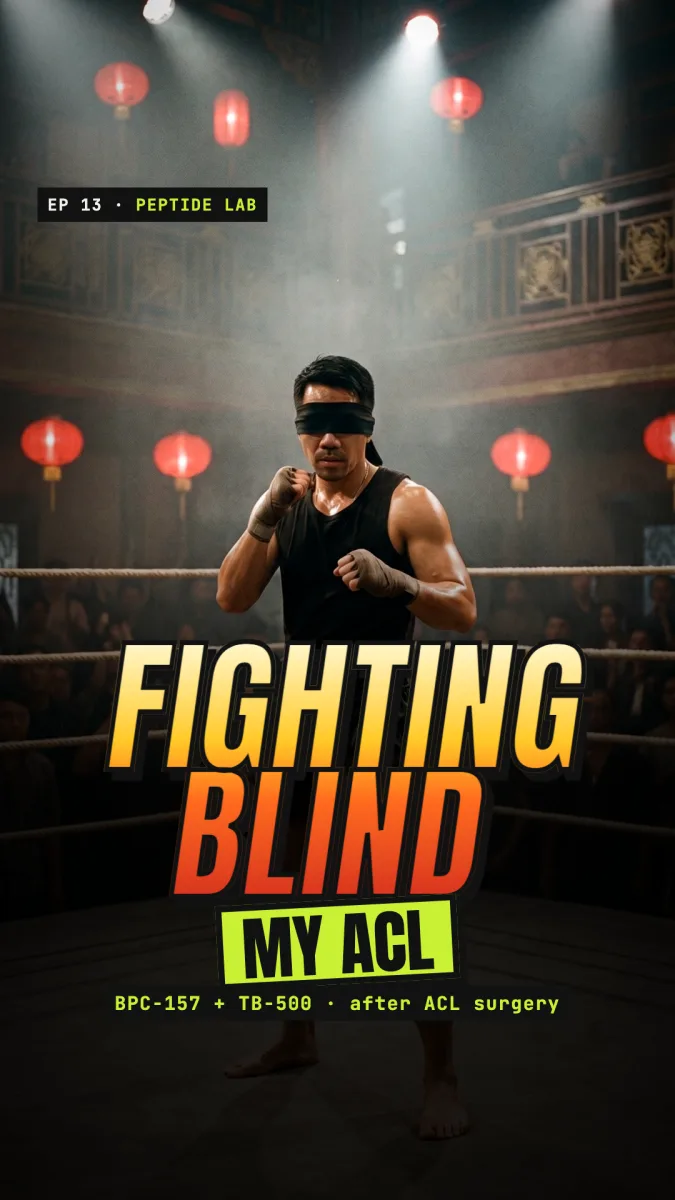
Episode 13 cover: BPC-157 and TB-500 after my ACL surgery: fighting blind ▶
EP 13 · FIGHTING BLIND · EDU ONLY2:25

BPC-157 and TB-500 after my ACL surgery: fighting blind

A late-80s tournament movie. I tore my ACL in Muay Thai sparring and took BPC-157 and TB-500 during my recovery. Then I checked the evidence, round by round: what TB-500 is, the 2016 ban, BPC-157 in people, ACL grafts and the FDA vote. I recovered well, and I can't tell you why.

Watch ▶

What it covers

  1. ● Proven in humans

    TB-500 is a lab-made piece of thymosin beta-4, a protein your own cells make: 7 of its 43 building blocks. The FDA found no study that gave TB-500 to a person.

  2. ◐ Reported

    It showed up first in horse and greyhound racing, around 2011.

  3. ● Proven in humans

    In 2016 a sports court banned 34 Australian footballers. The ruling named thymosin beta-4, the protein TB-500 is cut from. Both peptides are banned in sport at all times.

  4. ● Proven in humans

    BPC-157 in people: 3 tiny studies, 30 people, no placebo group, all rated poor quality. On ACL grafts: zero human studies.

  5. ◐ Reported

    July 2026: the FDA's own scientists said no to pharmacies making either peptide. Its outside advisers voted yes, 8 to 6. The FDA has not decided.

  6. ● Proven in humans

    Most people get the OK to start jogging around 3 months after ACL surgery. My 5K at month 6 was normal to good, not fast.

Specimens in this episode

Explore on this site

Sources

  1. FDA briefing on TB-500, July 2026 (no human studies)
  2. FDA briefing on BPC-157, July 2026
  3. Systematic review 2026: BPC-157 in humans, 3 studies (PubMed)
  4. CNN: sports court bans 34 Essendon players, 2016
  5. FDA Law Blog: the July 2026 advisory committee votes
  6. Rambaud 2018: when running starts after ACL surgery (BJSM)
  7. WADA Prohibited List 2026
EP 12
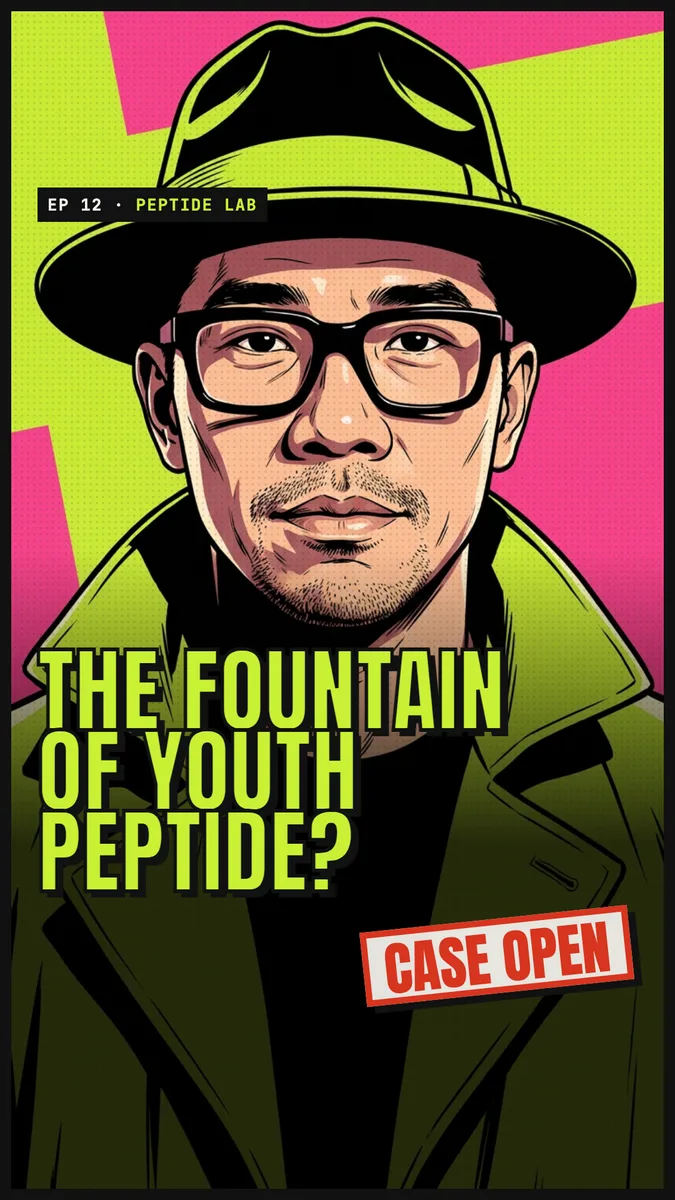
Episode 12 cover: GHK-Cu: the fountain of youth peptide case ▶
EP 12 · THE COPPER CASE · EDU ONLY1:51

GHK-Cu: the fountain of youth peptide case

A comic-noir detective case. The internet calls GHK-Cu the fountain of youth peptide. I am about to start it, so first I opened the case: what copper does, what GHK is, and three exhibits: the cream, the vial and the "drops by half with age" claim.

Watch ▶

What it covers

  1. ● Proven in humans

    Copper is a mineral your body needs in tiny amounts to stitch collagen together, make energy and use iron. GHK is a 3-amino-acid peptide your own blood makes. It grabs copper: together they are GHK-Cu.

  2. ○ Animal / lab only

    In dishes and in animals, GHK-Cu helps cells make collagen and wounds heal faster.

  3. ◐ Reported

    Creams: about 10 small human studies. The most quoted ones are conference abstracts, and the most careful one, 13 people after laser treatment, found no measured benefit.

  4. ● Proven in humans

    Injecting it: zero human studies. In 2026 the FDA warned that injectable GHK-Cu may trigger immune reactions, with limited data in humans.

  5. ◐ Reported

    The famous "drops by half with age" number traces back to one unpublished 1973 PhD thesis. I could not find anyone who has measured it again.

Specimens in this episode

Explore on this site

Sources

  1. FDA: bulk drug substances that may present significant safety risks (injectable GHK-Cu listed)
  2. Pickart and Margolina 2018 review: the "200 to 80" claim (PMC)
  3. Pickart 2017 review: medical students vs faculty (PMC)
  4. Miller 2006: copper peptide after laser resurfacing, no objective benefit
  5. Independent 2026 evidence map of GHK-Cu (PMC)
  6. Linus Pauling Institute: copper
EP 11
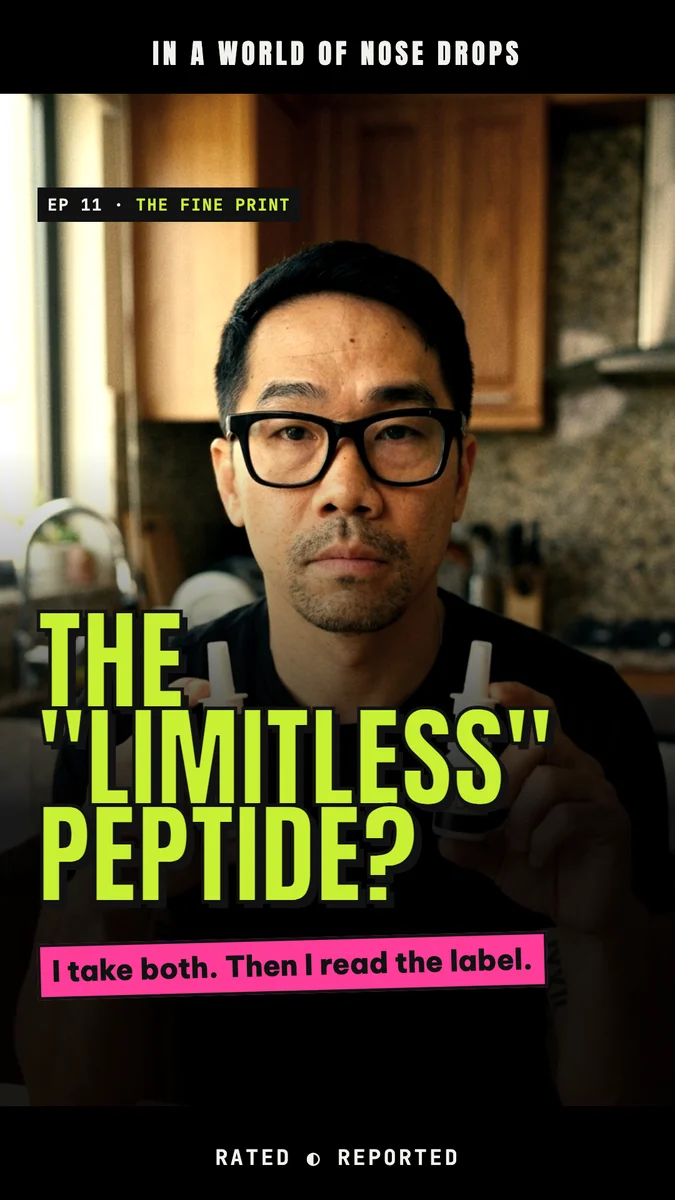
Episode 11 cover: Semax and Selank: read the label ▶
EP 11 · THE FINE PRINT · EDU ONLY1:36

Semax and Selank: read the label

A movie-trailer parody. The internet calls them Limitless in a bottle. I take both, so I read their real Russian labels: the promise, the fine print, and how thin the proof is.

Watch ▶

What it covers

  1. ● Proven in humans

    In Russia, Semax is approved as nasal drops for memory problems after a stroke or brain injury, and, in its own words, "to prevent mental fatigue during monotonous operator work".

  2. ● Proven in humans

    The same Semax label says not to use it with disorders accompanied by anxiety. Selank, the peptide it is often paired with, is sold for anxiety.

  3. ◐ Reported

    Proof of sharper focus in healthy people: one study of 19 men, from 1996. "Calm without the sleepy feeling" rests on small trials run by the lab that made it.

  4. ● Proven in humans

    Zero registered trials. In July 2026 the FDA said there is not enough evidence that Semax works, and no study has looked at injecting either one in people.

Specimens in this episode

Explore on this site

Sources

  1. FDA briefing document on Semax, Pharmacy Compounding Advisory Committee, July 2026 (PDF)
  2. FDA: bulk drug substances that may present significant safety risks (Semax and Selank listed)
  3. Semax: official Russian instructions (RLS, in Russian)
  4. Selank: official Russian instructions (RLS, in Russian)
EP 10
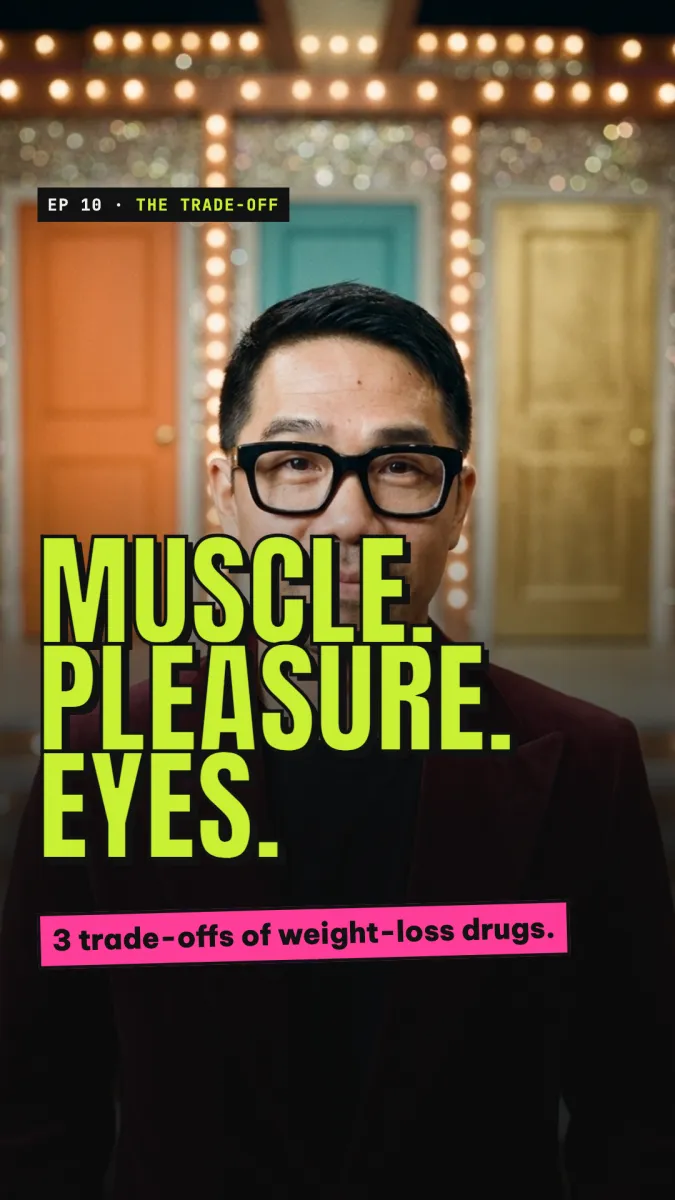
Episode 10 cover: The trade-offs of GLP-1 drugs ▶
EP 10 · THE TRADE-OFF · EDU ONLY1:47

The trade-offs of GLP-1 drugs

A 1970s game show where the prize is weight loss, but every prize comes with a trade. Behind three doors: muscle, pleasure and eyes. And why my own test includes an InBody scan.

Watch ▶

What it covers

  1. ● Proven in humans

    Door 1, muscle: in one big semaglutide trial, about 40% of the weight people lost wasn't fat. It was lean mass: muscle, water and other tissue.

  2. ◐ Reported

    Any fast weight loss costs some muscle. Strength training and enough protein can help you keep it.

  3. ◐ Reported

    Door 2, pleasure: some people say food, drinks and fun feel flatter. One idea is that the drug quiets the brain's reward system too. That's still a theory.

  4. ● Proven in humans

    In January 2026, the FDA reviewed 91 trials, found no rise in depression or suicidal thoughts, and asked makers to drop that warning.

  5. ● Proven in humans

    Door 3, eyes: Europe's drug regulator says a sudden loss of sight in one eye is a very rare side effect of semaglutide, up to 1 in 10,000 people. If your vision suddenly changes, see a doctor that day.

Specimens in this episode

Explore on this site

Sources

  1. Once-weekly semaglutide in adults with overweight or obesity (STEP 1, with the body-scan substudy), NEJM 2021
  2. FDA requests removal of suicidal ideation warning from GLP-1 labels (13 Jan 2026)
  3. PRAC concludes NAION is a very rare side effect of semaglutide, EMA
EP 09
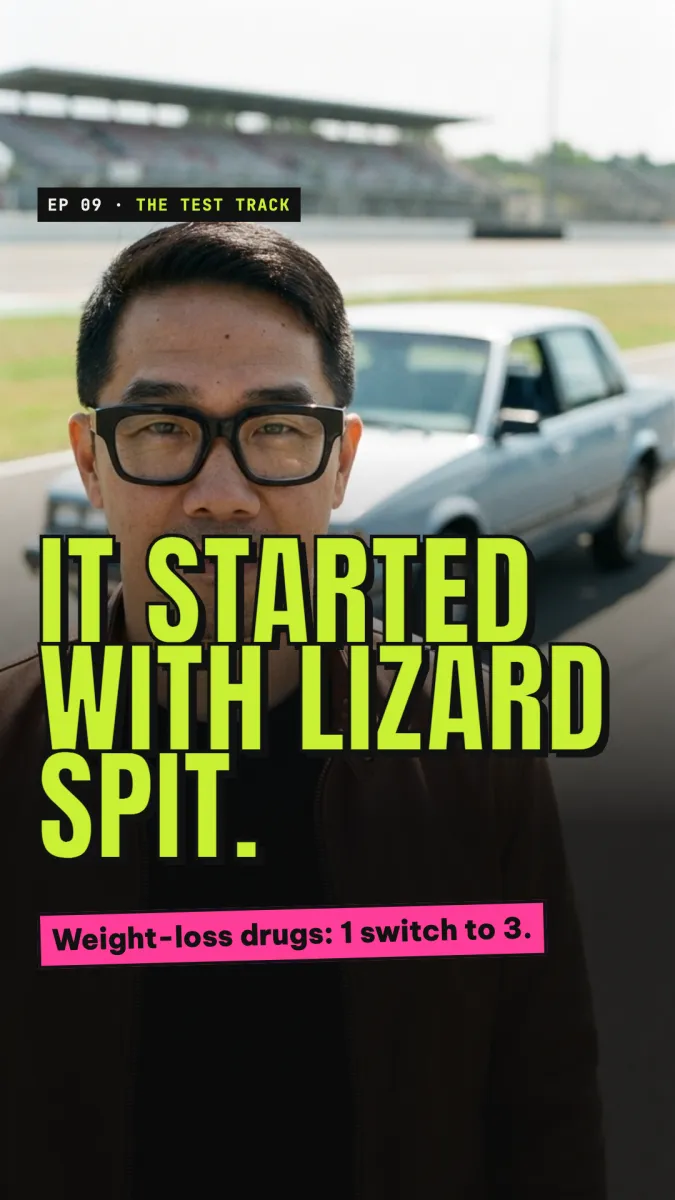
Episode 09 cover: The weight-loss drug evolution ▶
EP 09 · THE TEST TRACK · EDU ONLY1:47

The weight-loss drug evolution

A 1980s motoring show about weight-loss drugs. The family began with lizard spit. Each new generation switches on one more signal: one, two, then three. And I'm testing the newest one myself.

Watch ▶

What it covers

  1. 2005: scientists copied a hormone found in Gila monster saliva. It became the first drug of its kind, for diabetes. It copies a gut signal called GLP-1.

  2. ● Proven in humans

    Generation 1, semaglutide: one switch (GLP-1). Approved for weight in 2021. In its big trial, people lost about 15% of their weight on average, versus about 2% on placebo.

  3. ● Proven in humans

    Generation 2, tirzepatide: two switches (GLP-1 plus GIP). Head to head in 2025, people lost about 20% on it, versus about 14% on semaglutide.

  4. ● Proven in humans

    Generation 3, Retatrutide: three switches (adds glucagon). Its first two big trial papers came out in September 2026. Not approved anywhere yet.

  5. A faster car isn't a safer car: more switches doesn't prove it's safer, and stomach side effects like nausea are common with all three.

Specimens in this episode

Explore on this site

Sources

  1. The monster whose bite saves lives, Natural History Museum
  2. Head-to-head trial compares weight-loss drugs, Weill Cornell
  3. Phase III retatrutide study, Pharmaceutical Journal
EP 08
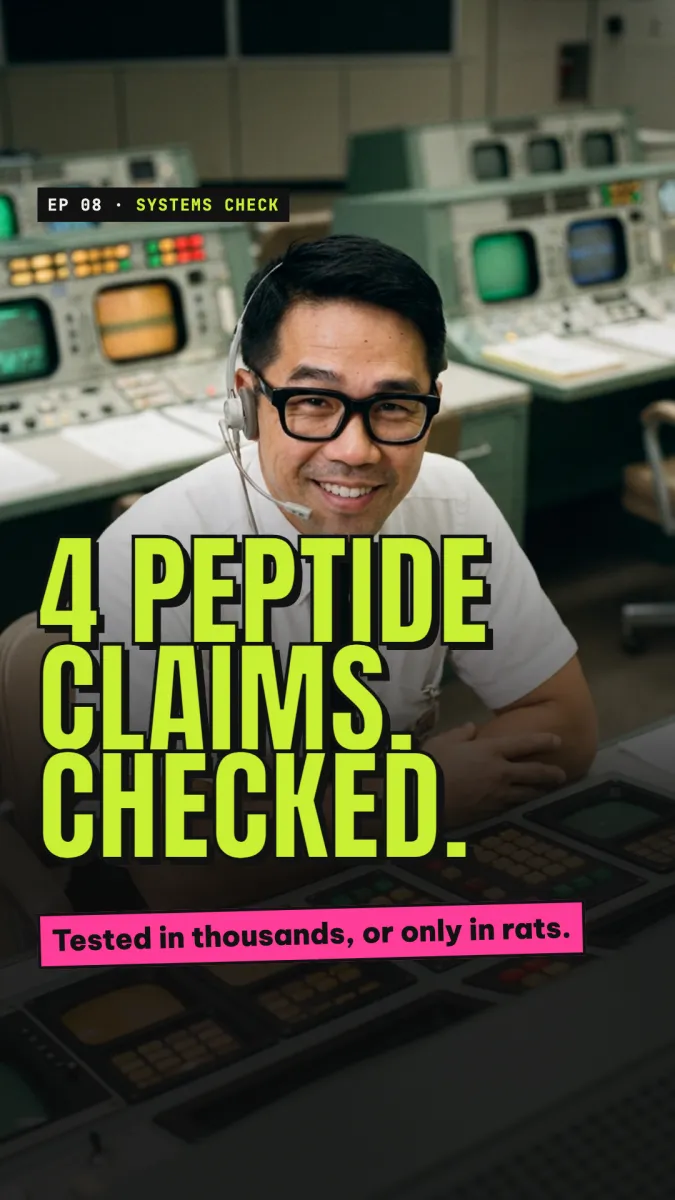
Episode 08 cover: The biological toolkit ▶
EP 08 · SYSTEMS CHECK · EDU ONLY2:00

The biological toolkit

A 1960s Mission Control where the rocket is your body. Some peptides are tested in thousands of people, some only in rats. So I run a systems check on four claims: sleep, weight, growth and repair. Go, hold or no-go.

Watch ▶

What it covers

  1. ◐ Reported

    Sleep and the body clock: Pinealon and Epitalon. Small studies, mostly from one lab in Russia. Reported, not proven. Hold.

  2. ● Proven in humans

    Weight and blood sugar: semaglutide and tirzepatide are approved medicines, tested in thousands of people. Go.

  3. ◐ Reported

    Retatrutide adds a third signal, glucagon. Big trials, still being tested. Hold.

  4. ● Proven in humans

    Growth: tesamorelin is approved for one job, excess belly fat in people with HIV. CJC-1295 is not approved for anything. Go for one use, no-go for CJC-1295.

  5. ○ Animal / lab only

    Repair: BPC-157 and TB-500 show promising results in animals. In people, no well-run trials yet. No-go for humans, for now.

  6. ◌ Theory

    One risk to watch: new blood vessels could, in theory, feed a hidden tumor.

Specimens in this episode

Explore on this site

Sources

  1. Tesamorelin (Egrifta) FDA approval, Fierce Biotech
  2. CJC-1295, Wikipedia
  3. Epitalon for sleep and the evidence gap, Dr Lewis
  4. BPC-157 human trials guide, peptide-db
EP 07
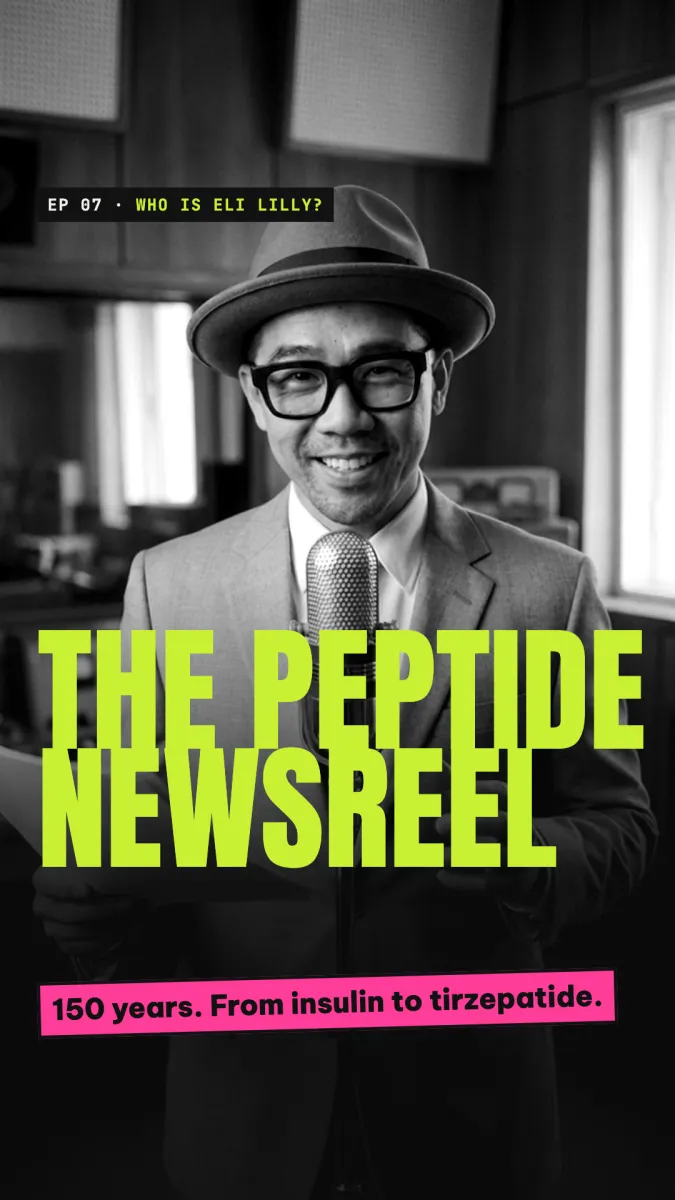
Episode 07 cover: Who is Eli Lilly? ▶
EP 07 · THE PEPTIDE NEWSREEL · EDU ONLY1:57

Who is Eli Lilly?

A 1950s newsreel about the company I keep naming. 150 years, from a small lab in 1876 to the first insulin for sale, to tirzepatide and Retatrutide today. The good chapters, the price chapter, and why it matters who paid for the study.

Watch ▶

What it covers

  1. 1876: Colonel Eli Lilly, a pharmacist and Civil War officer, opens a small lab in Indianapolis. His idea: medicine people can trust.

  2. ● Proven in humans

    1923: scientists in Toronto found a way to treat diabetes with insulin, a peptide. Lilly was the first company to make it for sale.

  3. ● Proven in humans

    1982: Lilly sold the first medicine made by engineered bacteria: human insulin.

  4. ● Proven in humans

    Today: Lilly makes tirzepatide, approved for type 2 diabetes (2022) and weight (2023), and is testing Retatrutide. In 2025 it became the first healthcare company worth about $1 trillion.

  5. Not every chapter is clean: US insulin prices kept climbing for years. In 2023, under pressure from Congress, Lilly cut the list price of most of its insulins by 70%.

  6. ● Proven in humans

    The biggest Retatrutide trials are run and paid for by Lilly, the company that would sell it. That is normal. The first two papers are now published, and both trials were still paid for by Lilly.

Specimens in this episode

Explore on this site

Sources

  1. Eli Lilly (person), Wikipedia
  2. A history of Eli Lilly & Co, pharmaphorum
  3. Record-time FDA approval of human insulin in 1982, ACSH
  4. Tirzepatide approval history, Drugs.com
  5. Lilly cuts insulin prices up to 70%, ABC7
EP 06
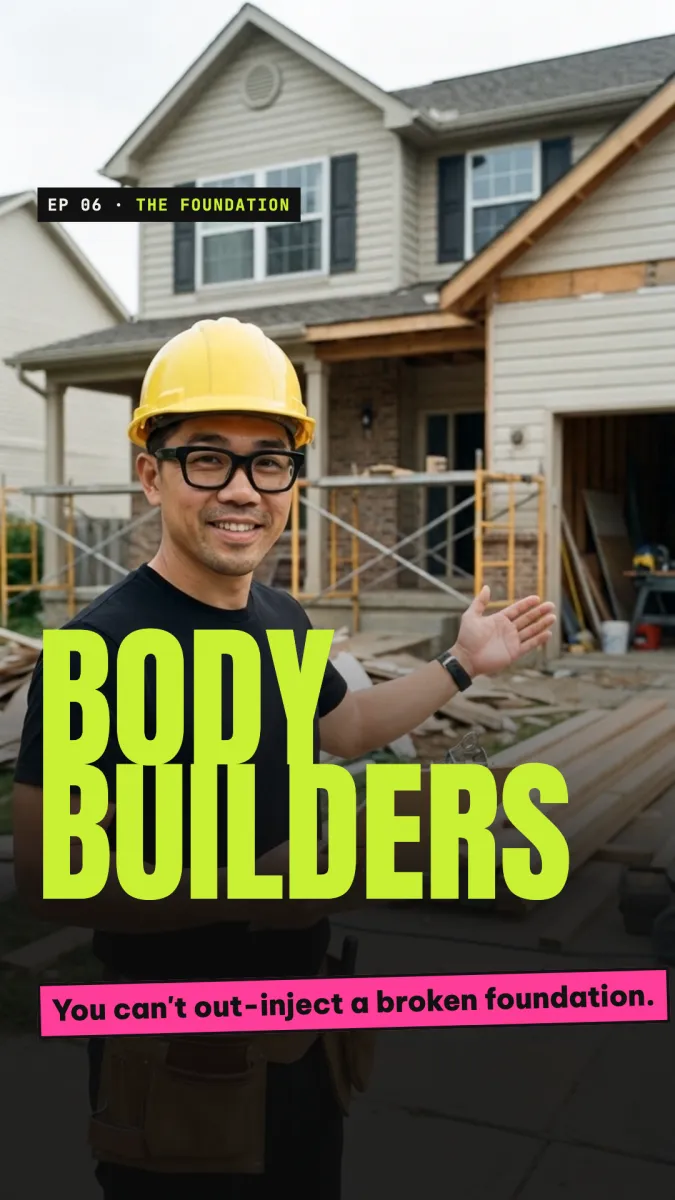
Episode 06 cover: The foundation ▶
EP 06 · BODY BUILDERS · EDU ONLY1:44

The foundation

A 90s home makeover show where the house is your body. Sleep is the foundation, training is the walls, food is the plumbing, and the shiny peptide is the chandelier on top. Then I inspect my own house.

Watch ▶

What it covers

  1. The rule: you can't out-inject a broken foundation. Peptides are at best a booster on top, never the base.

  2. ● Proven in humans

    Sleep: most adults need at least 7 hours a night. Less than that is linked to obesity, diabetes and heart disease.

  3. ● Proven in humans

    Training: work your muscles at least 2 days a week. That is the World Health Organization's advice.

  4. ● Proven in humans

    Food: your body needs enough protein to build and repair muscle. Real food, most of the time.

  5. My own inspection: sleep 6 to 7 hours, just under the line. Training 5 days a week. Real food on weekdays, junk on weekends, protein not tracked. My first repair is more sleep.

Explore on this site

Sources

  1. CDC MMWR: adult sleep duration and health
  2. WHO 2020 guidelines on physical activity (summary)
EP 05
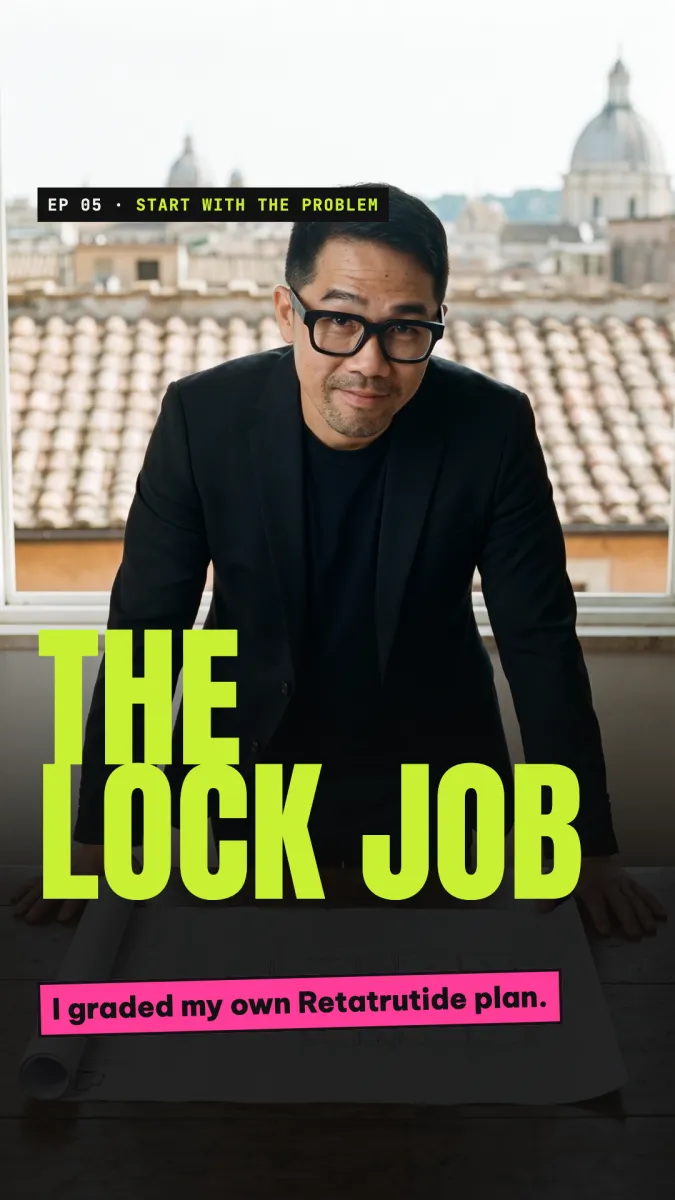
Episode 05 cover: Start with the problem ▶
EP 05 · THE LOCK JOB · EDU ONLY2:08

Start with the problem

A 60s heist about my own Retatrutide plan. The amateur grabs whatever everyone is using and gets caught. The pros work in three steps. Then I grade my own plan, honestly.

Watch ▶

What it covers

  1. Step 1, case the joint: name the real problem, and get it checked. Don't guess.

  2. Step 2, the right tool for this lock: match it to the research.

  3. Step 3, check the vault: measure. Did it help? Did it harm?

  4. ● Proven in humans

    In Retatrutide's biggest trial (TRIUMPH-1, published in NEJM in September 2026), people lost 17.6% to 25.0% of their weight on average over 80 weeks, versus 3.9% on placebo.

  5. ◐ Reported

    In a smaller phase 2 study, fat inside the liver dropped by about half, up to more than 80%.

  6. Not approved anywhere yet. Lilly plans to apply to the US FDA in early 2027. Not registered in Vietnam. Stomach side effects like nausea are common.

  7. My own plan scored half, half and zero: I never got checked, I picked it because it was popular, and I measured nothing. This week I'm fixing that.

Specimens in this episode

Explore on this site

Sources

  1. AJMC, May 2026: TRIUMPH-1 results
  2. Nature Medicine (2024): retatrutide and liver fat, phase 2a trial
  3. Lilly, July 2026: TRIUMPH-2 and TRIUMPH-3 results
  4. Drugs.com: retatrutide approval status
EP 04
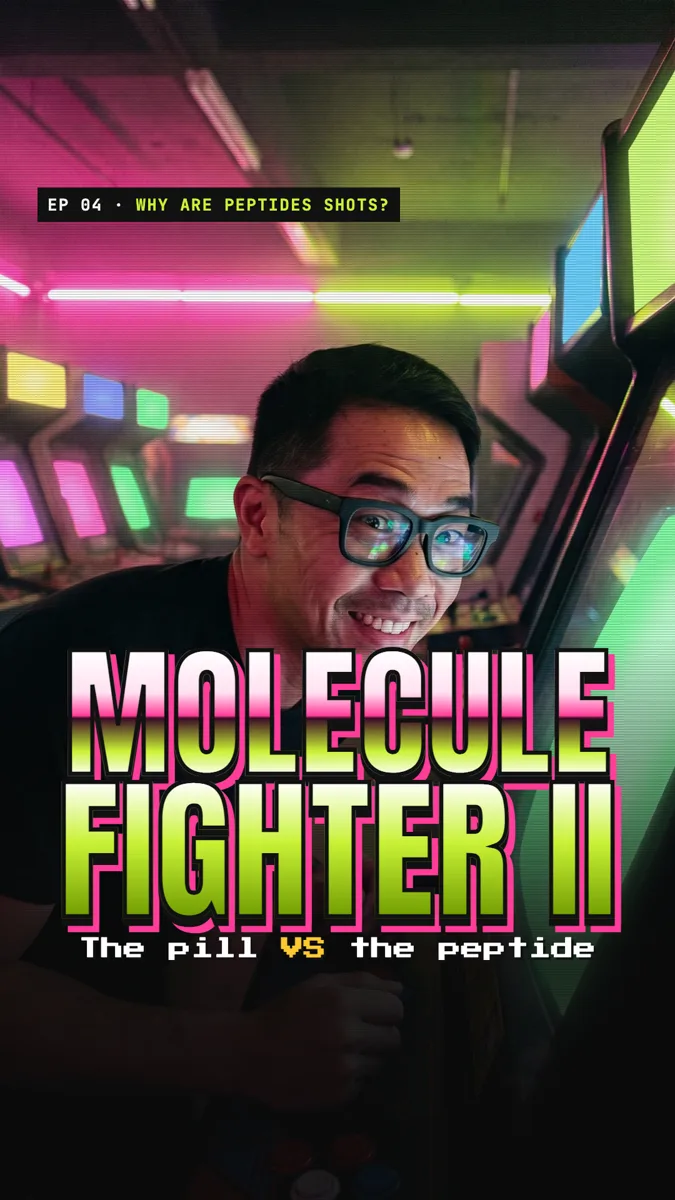
Episode 04 cover: The pill vs the peptide ▶
EP 04 · MOLECULE FIGHTER II · EDU ONLY1:58

The pill vs the peptide

Most medicines you know are pills. Most peptide medicines are shots. Why? A 90s arcade fight between the pill (the hammer) and the peptide (the app).

Watch ▶

What it covers

  1. ● Proven in humans

    Most pills are small molecules: tiny, a few dozen atoms, so they travel almost everywhere in the body, even inside cells.

  2. ● Proven in humans

    That reach means a small molecule can hit things you didn't want hit. Aspirin blocks an enzyme that helps make pain signals, and the same enzyme protects the stomach lining.

  3. ● Proven in humans

    A peptide is a short chain of amino acids, much bigger than the drug molecule in a pill. It fits one lock (receptor) on a cell and starts one job.

  4. ● Proven in humans

    Your gut digests peptides like food, so most peptide medicines are shots, not pills.

  5. ● Proven in humans

    Your own GLP-1 lasts about two minutes in your blood. Semaglutide is a GLP-1 peptide tweaked to last about a week.

  6. Hammer or app, it's not a safety ranking. Every molecule is different.

Specimens in this episode

Explore on this site

Sources

  1. Frontiers in Drug Delivery (2026): oral delivery of peptide drugs
  2. Peptides vs small molecules: comparison table (PMC)
  3. Semaglutide metabolism and half-life
  4. Aspirin: Molecule of the Month (University of Bristol)
EP 03
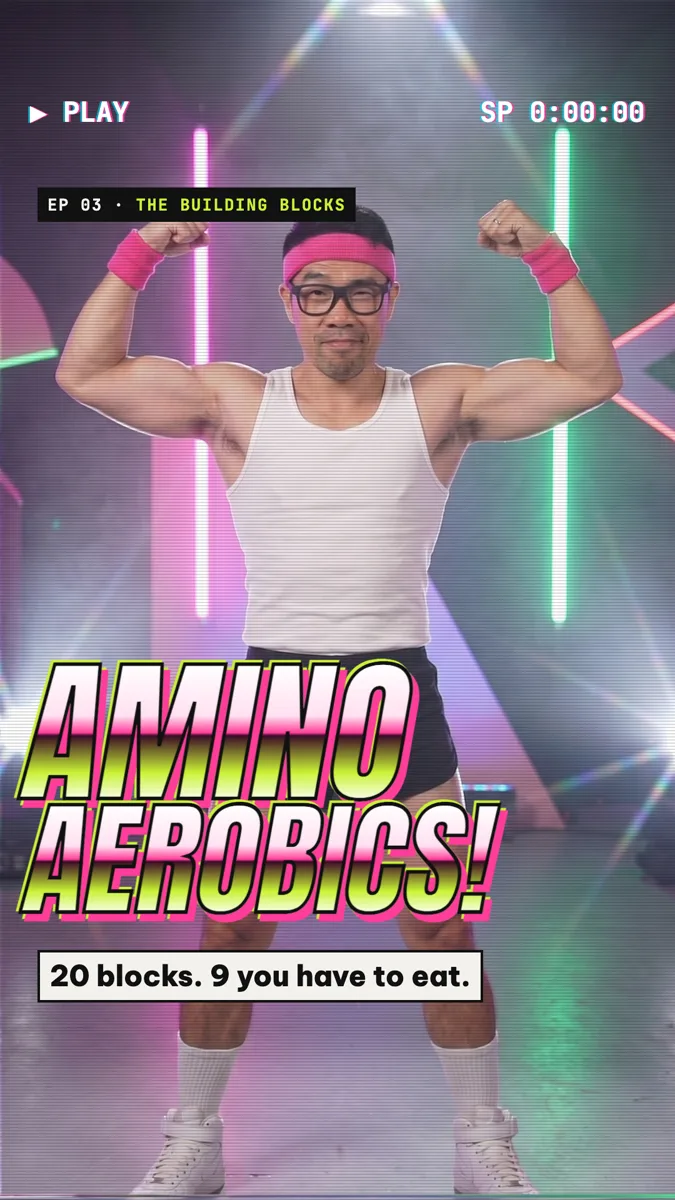
Episode 03 cover: The 20 building blocks ▶
EP 03 · AMINO AEROBICS · EDU ONLY1:16

The 20 building blocks

A fake 80s aerobics show about amino acids: the 20 building blocks every protein and every peptide is made from.

Watch ▶

What it covers

  1. ● Proven in humans

    Your body uses 20 amino acids to build protein.

  2. ● Proven in humans

    9 of them are essential: your body can't make them, so they have to come from food.

  3. ● Proven in humans

    Your gut breaks the protein you eat into blocks, then your body rebuilds them into muscle, skin, enzymes and hormones.

  4. ● Proven in humans

    Short chain: a peptide. Long chain: a protein. Same blocks, different length.

  5. ● Proven in humans

    Side jobs: tryptophan is used to make serotonin and melatonin, tyrosine to make dopamine.

  6. ● Proven in humans

    Meat, fish, eggs, dairy and soy have all 9. Most plants are low in one or two, so mix them, like rice and beans.

Explore on this site

Sources

  1. StatPearls (NCBI Bookshelf): Biochemistry, essential amino acids
  2. Review: tryptophan and tyrosine as building blocks for serotonin and dopamine
EP 02
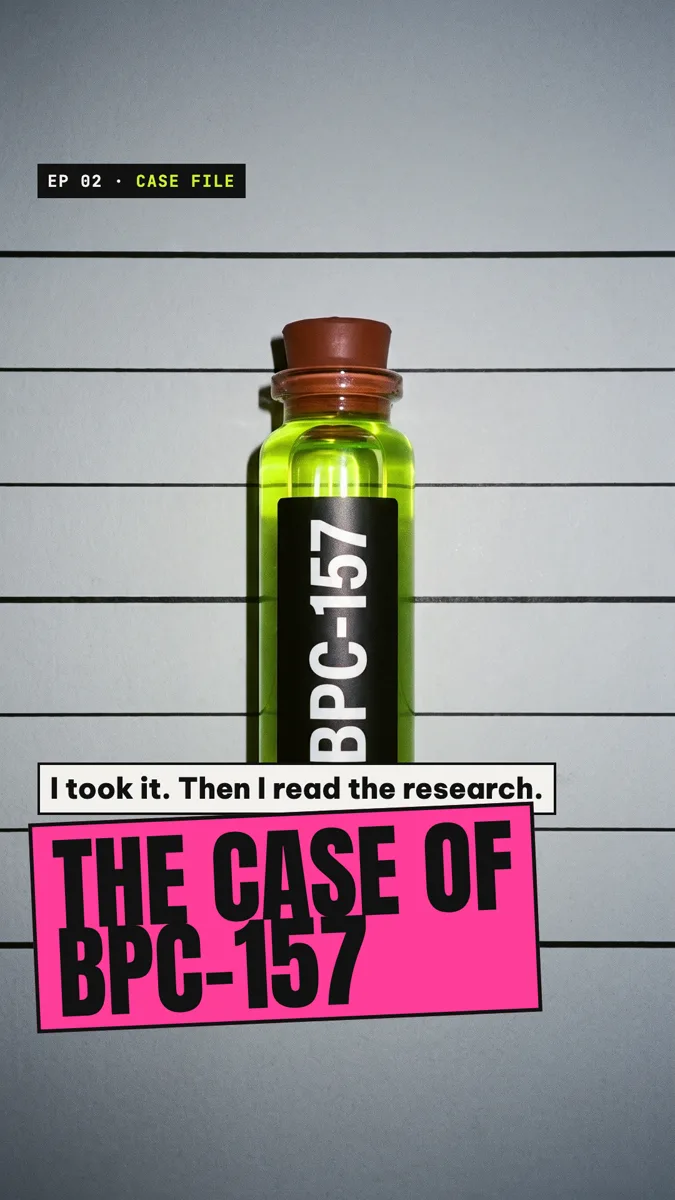
Episode 02 cover: The case of BPC-157 ▶
EP 02 · CASE FILE · EDU ONLY1:25

The case of BPC-157

I took BPC-157 and TB-500 after my ACL surgery. So I put them on trial: the evidence, my own results, and the verdict.

Watch ▶

What it covers

  1. ○ Animal / lab only

    BPC-157: in animal studies, cut tendons healed and ligaments regrew. Gut lining and blood vessels are studied too.

  2. ◐ Reported

    In people: a few tiny studies, none against a placebo.

  3. TB-500: I found no published human trials on it.

  4. ◌ Theory

    Growing new blood vessels could, in theory, also feed a hidden tumor.

  5. Both are banned in sport, and no health regulator has approved either for use in people.

  6. ◐ Reported

    My results: no rest days, 5K at month 6, boxing at month 8. Verdict on the evidence: not proven, case stays open.

Specimens in this episode

Sources

  1. AAOS 2025 review of BPC-157 research (abstract)
  2. USADA: BPC-157
  3. BSCG: TB-500 status, risks and bans in sport
EP 01
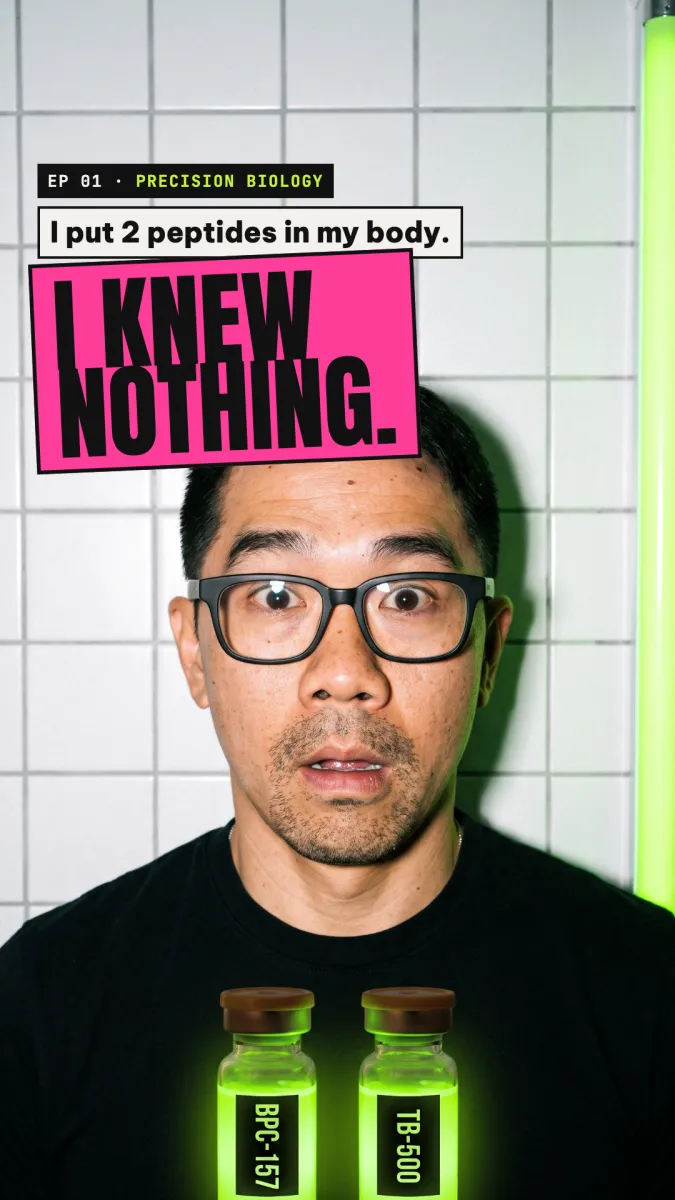
Episode 01 cover: What is a peptide? ▶
EP 01 · PRECISION BIOLOGY · EDU ONLY1:16

What is a peptide?

After my ACL reconstruction in October 2025, I took BPC-157 and TB-500, knowing almost nothing about them. This is where the learning starts.

Watch ▶

What it covers

  1. ● Proven in humans

    A peptide is a short chain of amino acids, the small building blocks of your body.

  2. "I'm on peptides" tells you as much as "I'm on pills". The word says how it is built, not what it does.

  3. ● Proven in humans

    Not new: insulin is a peptide, first isolated in 1921.

  4. ○ Animal / lab only

    Most of the research on BPC-157 is in animals and labs, not people.

Specimens in this episode

Sources

  1. Nobel Prize 1923: the discovery of insulin
  2. AAOS 2025 review of BPC-157 research (abstract)